
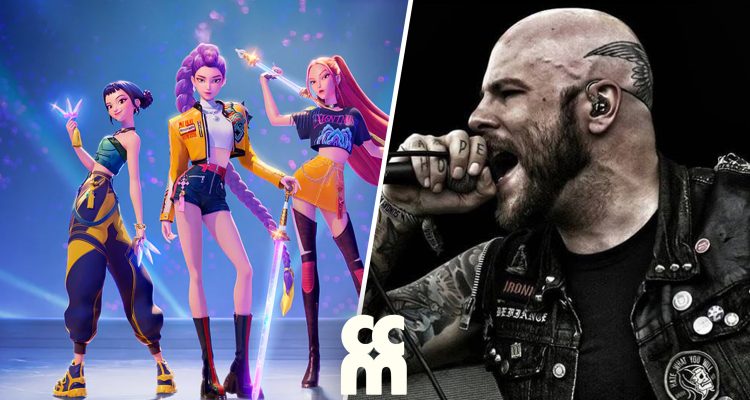
There are plenty of ways for a Christian metal band to celebrate a Dove Award nomination.
The award may be “Golden,” but Demon Hunter isn’t exactly glowing. What sounds more like a hardcore band that still celebrates its church upbringing than suing one of the world’s most beloved children’s franchises?
Somewhere, the ghost of the great ’90s Disney boycott just sat straight up in bed.
But here’s the thing:
Demon Hunter’s complaint isn’t quite as ridiculous as the headline makes it sound.
First, why, and who, is Demon Hunter actually suing?
The lawsuit was filed by Hyde Lane, the corporation associated with Demon Hunter, against Netflix, Netflix Studios and AEG Presents. It alleges trademark infringement, unfair competition and false designation of origin involving the KPop Demon Hunters name. NME
Demon Hunter’s basic argument is pretty straightforward.
They’ve been Demon Hunter for roughly a quarter-century. They’ve released records, toured the world and sold merchandise under that name. In the lawsuit, they argue that they’re the senior user of the Demon Hunter trademark and have spent decades building its value.
If Netflix had simply released an animated movie about demon-hunting K-pop stars, perhaps we’re not writing this story.
The problem, according to the lawsuit, is what happened next.
KPop Demon Hunters became enormous. The name moved beyond the movie and into music, soundtracks and merchandise. These are areas increasingly close to Demon Hunter’s own business. Then Netflix partnered with AEG Presents for a KPop Demon Hunters global concert tour reportedly planned for 150 cities.
That’s where Demon Hunter argues the two worlds have gotten uncomfortably close.
According to the complaint, Netflix and its partners have moved into “almost complete overlap” with goods and services offered under the Demon Hunter mark. The band alleges Netflix’s vastly larger footprint is overwhelming an identity Demon Hunter spent decades establishing. NME
In other words:
The HUNTR/X girls may have defeated the Saja Boys (SPOILER), but Christian metalcore boys from the Pacific Northwest are a different challenge.
According to the band, there really has been confusion. This is where the story gets both considerably funnier and considerably more sympathetic to Demon Hunter.
According to reporting on material included in the filing, someone bought about $500 worth of top-tier tickets to a Demon Hunter concert in Albany, New York, believing they were purchasing tickets to take their 5- and 6-year-old daughters to KPop Demon Hunters.
They subsequently contacted the band looking for a refund so they could buy tickets to the actual KPop Demon Hunters show. NME
Now…
There is a tiny part of us that desperately wants to know what would have happened had nobody caught the mistake.
The lights go down.
Mom says, “Here they come!”
Ryan Clark appears and screams, “The Honmoon can no longer protect you!”
But that example also gets to the heart of what Demon Hunter is arguing: the confusion they feared isn’t entirely hypothetical anymore. The band alleges that consumers have already believed the two properties were affiliated, and that the move into live touring makes that concern more significant.
You don’t have to know how a court will ultimately rule to understand why that would be frustrating. Demon Hunter is reportedly seeking an injunction, damages, profits associated with the allegedly infringing branding, attorneys’ fees and a jury trial. The complaint also alleges the band has suffered commercial and reputational harm as a much larger entertainment company expands into its marketplace. NME
Whether a court ultimately agrees with those arguments is another matter entirely.
But after looking beyond the admittedly hilarious headline, it’s hard not to have some sympathy for the band’s position.
Demon Hunter didn’t name itself last year. And now one of the largest entertainment companies on Earth has a massively successful music property with an extremely similar name, merchandise and a live concert business.
If you’re Demon Hunter, at what point do you have to say something?
That’s ultimately where the jokes should end.
Because we love the absurdity of this story. It’s almost impossible not to.
It’s Demon Hunter vs. KPop Demon Hunters.
This story was written for us.
But Demon Hunter has also spent a lifetime earning the right to care about the name on the front of its records. For a band that has survived changing labels, changing musical trends and an industry that looks very different from when it started, watching a massive entertainment property suddenly occupy essentially the same Google-search real estate has to be surreal — and probably pretty maddening.
Unfortunately, if Demon Hunter ultimately comes out on top, their drummer Yogi Watts may want to lawyer up, too. There is an unforeseen consequence of Demon Hunter establishing this aggressive new era of trademark enforcement.
Because somewhere in the Hanna-Barbera legal department, a smarter-than-the-average bear has just been alerted to this situation and, as we know… he’s hungry.
Editor’s note & sources: This article is based on allegations contained in or reported from Demon Hunter’s federal lawsuit against Netflix, Netflix Studios and AEG Presents, as well as media coverage of the complaint by NME, TheWrap and Complex. TheWrap and Complex report having reviewed the filed complaint. The case remains pending, and the allegations described have not been adjudicated.
Leave a Reply
You must be logged in to post a comment.