
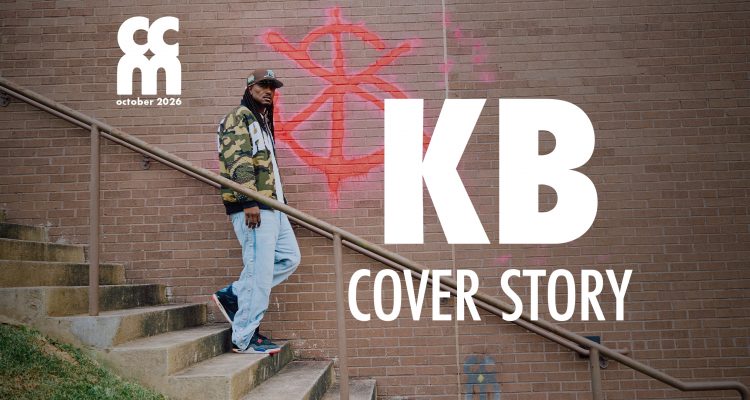
More Christian Than Artist
After twenty years of doing this, I’ve developed a rhythm to my interviews. That can be a crutch, but often it is just part of a signature experience for the audience. I listen, I follow the interesting detours, I know when to interrupt and when to let someone keep going. Even when the person across from me is famous, intimidating or particularly passionate, I usually feel relatively in control of the conversation.
KB was different.
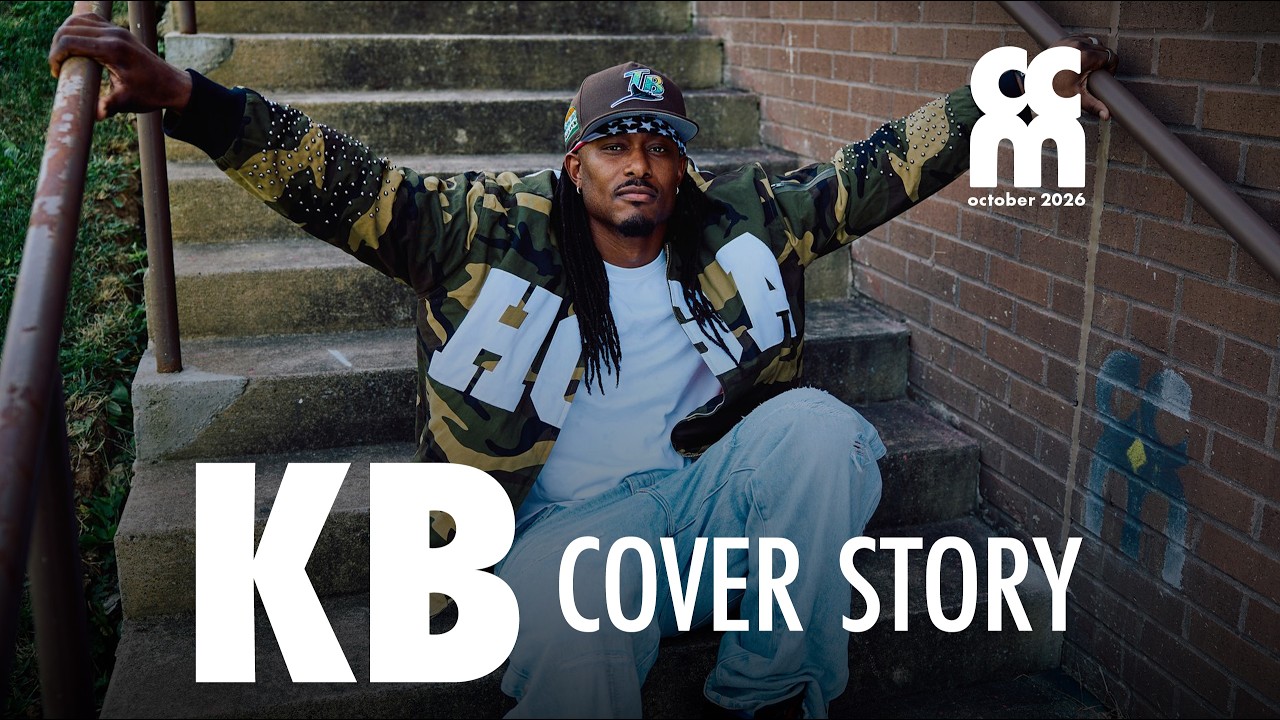


This may have been the most overwhelmed I have ever felt by a guest, and it didn’t start that way. Before the cameras were rolling, the man sitting in our studio was kind, creative, reserved and almost surprisingly quiet. He listened carefully and went with our team through the concepts for the live performance and photoshoot. There was an ease about him that did not immediately resemble the guy whose records can sound like a revival meeting breaking out in the middle of a mosh pit. Then we sat across from each other. The camera turned on. And I got hit by a train.
Suddenly, sitting across from me was the kid who had started college at 16 and once imagined a future in law before walking away from that trajectory to study the Bible.
Trust me, the lawyer is still in there.
And, unmistakably, so is the preacher.
I would ask a question and KB would not simply answer it. He would build a case. One thought would connect to another, then to Scripture, then to culture, then back to the original premise. Occasionally I would try to steer us toward the next subject only to realize he was still assembling the argument from the previous one.
At one point even KB seemed to realize what had happened.
“My goodness, my goodness, my goodness,” he said. “I already preached a sermon to myself.”
He wasn’t wrong.
There were moments during our conversation when I stopped feeling like I was simply interviewing KB and started feeling like KB was preaching directly at me.
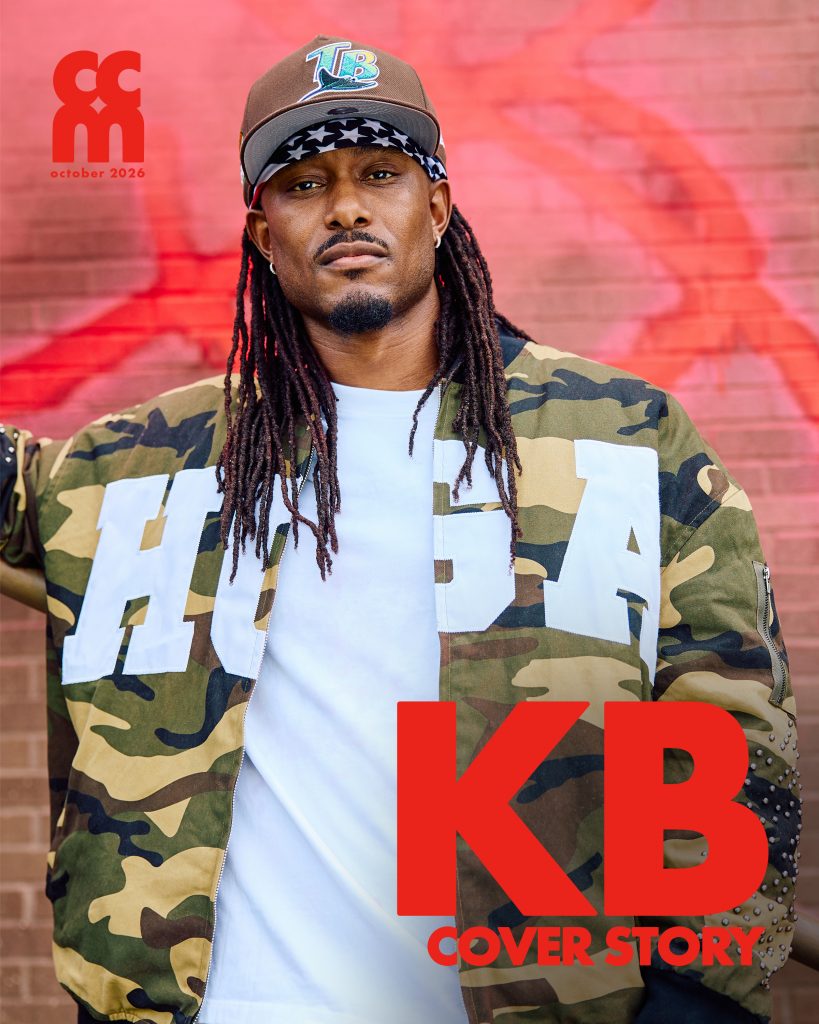
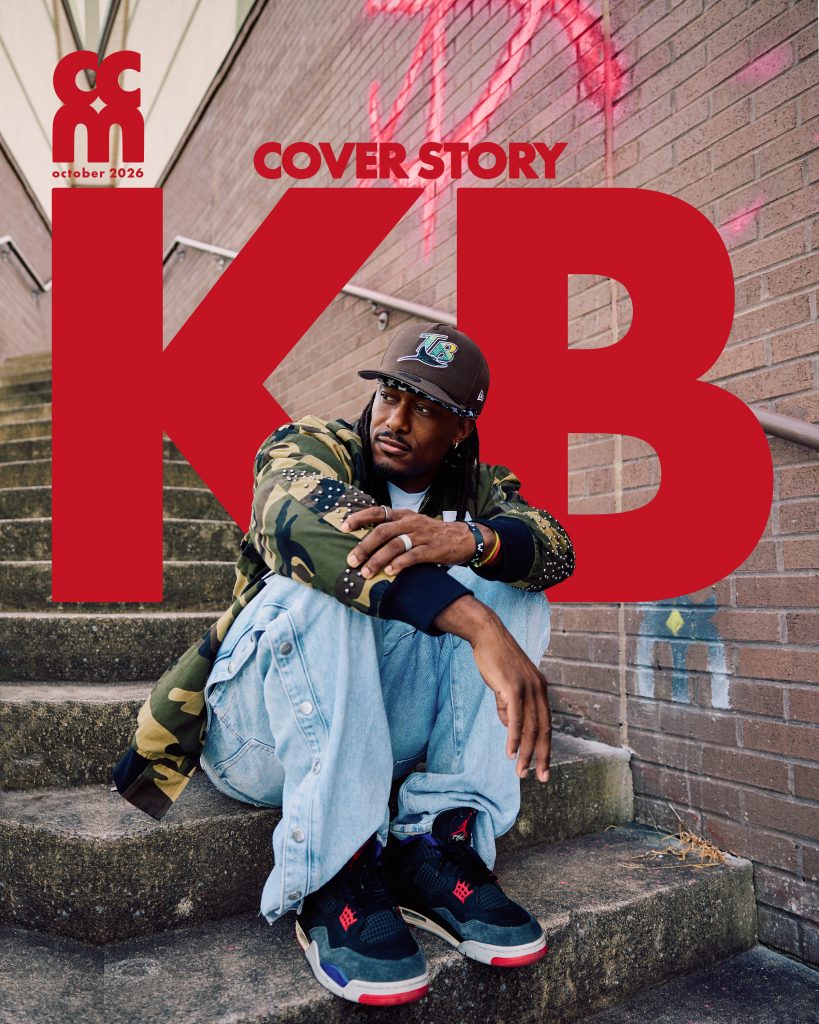
“The goal for us is that we would be more Christian than we are artist. I want my Christianity to be a modifier of any other label you give me.”
– KB
And, if I am being truthful, some of it was convicting.
That is an unusual thing for me to write in a cover story. I am there to ask questions, challenge assumptions when necessary and hopefully create a conversation that tells you something you did not know when you started reading or watching. But pretending an interview did not affect me would be its own kind of dishonesty.
KB is intellectually quick, theologically intense and almost incapable of giving a casual answer to a question he believes matters. Yet none of this felt inconsistent with the quieter person I had met before the cameras came on. They felt like two expressions of the same man.
Christianity itself gives us language for that kind of apparent contradiction. Jesus is described through images that should almost oppose one another: the Lion and the Lamb. A King and a carpenter. Authority powerful enough to command the sea and humility willing to wash feet.
Strength and gentleness are not necessarily competing ideas.
KB took me directly there when we began discussing the danger of looking at Christian artists, pastors and leaders and assuming that because they speak with confidence, they somehow live beyond the doubts and temptations everyone else experiences.
“The audience is experiencing [that] with every Christian hero they have,” KB told me. “Every human being on this planet is experiencing all of the threats that you feel to your faith. They are experiencing them too.”
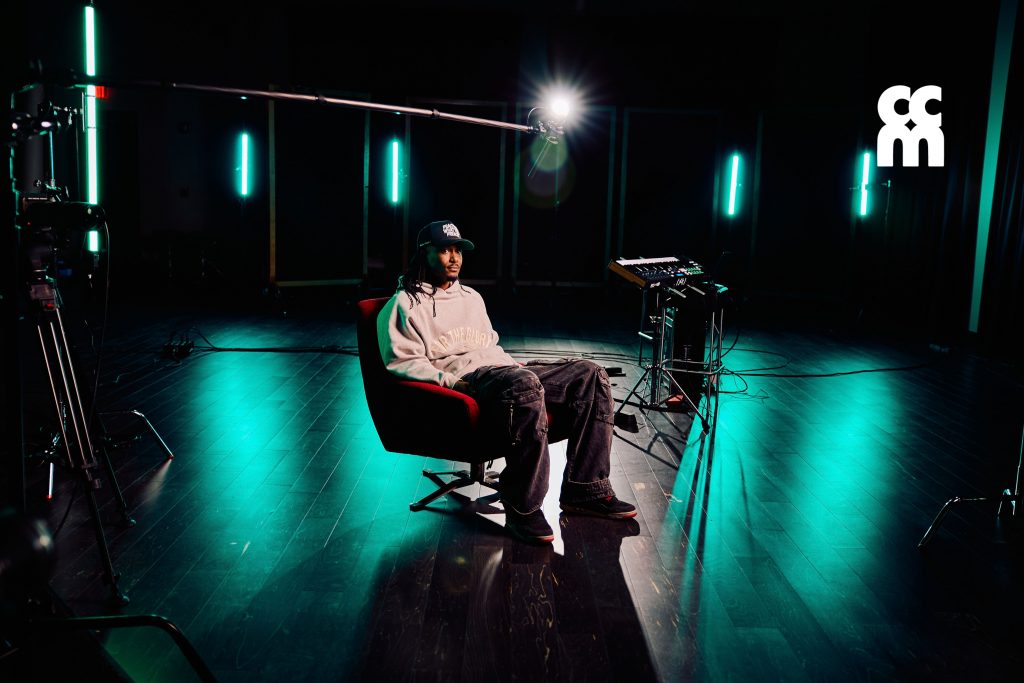
That answer seemed to unlock something in him.
“It is important to realize that the pattern of the Lord Jesus is that by His wounds we are healed,” he continued. “It was His willingness to suffer and then show it to you.”
KB’s point was that we often want our strongest Christian voices to look unbreakable. He wanted to point instead to a Jesus who could be powerful and wounded at the same time. “We are wounded healers.” He was not speaking theoretically.
“I know I have not done a good job in my music showing my wounds as much as I should,” KB admitted. “On this project, I told the story of my abuse as a child… because I realized that there’s a narrative shift that needs to happen.”
Christian leaders, he continued, are not leaders because they belong to some separate spiritual category.
“We become angry, angrier with each other, more isolated. And not realizing that this whole time we are being monetized by the platforms that we’re on, while we’re trying to monetize things on the platforms that we’re on.”
-KB
“We are folks that are tempted. We are folks that fall. We don’t get it right all the time either.”
That matters because KB has built a career on certainty. His music does not hide what it believes. There is no squinting at the lyrics trying to determine whether a Christian message might be buried underneath. KB makes Christian hip-hop in the most literal sense of the term. His records can be theological, confrontational, celebratory and complicated in the way a conversation with someone who desperately wants you to understand something can be.
At one point I asked him whether he even considers his music worship music. “Absolutely,” he answered. His definition was characteristically broader than genre. “When I think about what worship is in Scripture, this sort of bowing down before this reverent pursuit of this great, grand, glorious, majestic, powerful, awe-inspiring, fly God… I don’t think you can call your music Christian if that isn’t in it. And if that is in it, it’s by definition worship.”
There is the preacher again.
But the certainty is not supposed to suggest invulnerability.
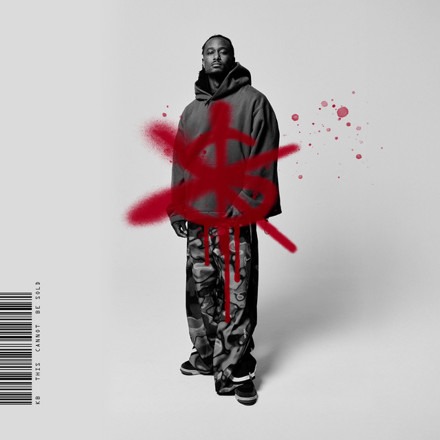
In many ways, KB’s new album, THIS CANNOT BE SOLD, is an argument against exactly that kind of performance.
Its title reaches nearly twenty years into his past.
KB was 16 years old when a Christian hip-hop album helped lead him to Jesus. The record was called Bloody Streets Volume One. He did not initially even realize it was Christian music. As he describes it, the “bloody streets” were about the blood of Jesus covering people others believed could not be reached.
On the front of that album was what looked like a parental advisory sticker. But if you read it closely, it did not say “explicit language.”
It said:
“This cannot be sold.”
“Bringing it back almost 20 years,” KB told me.
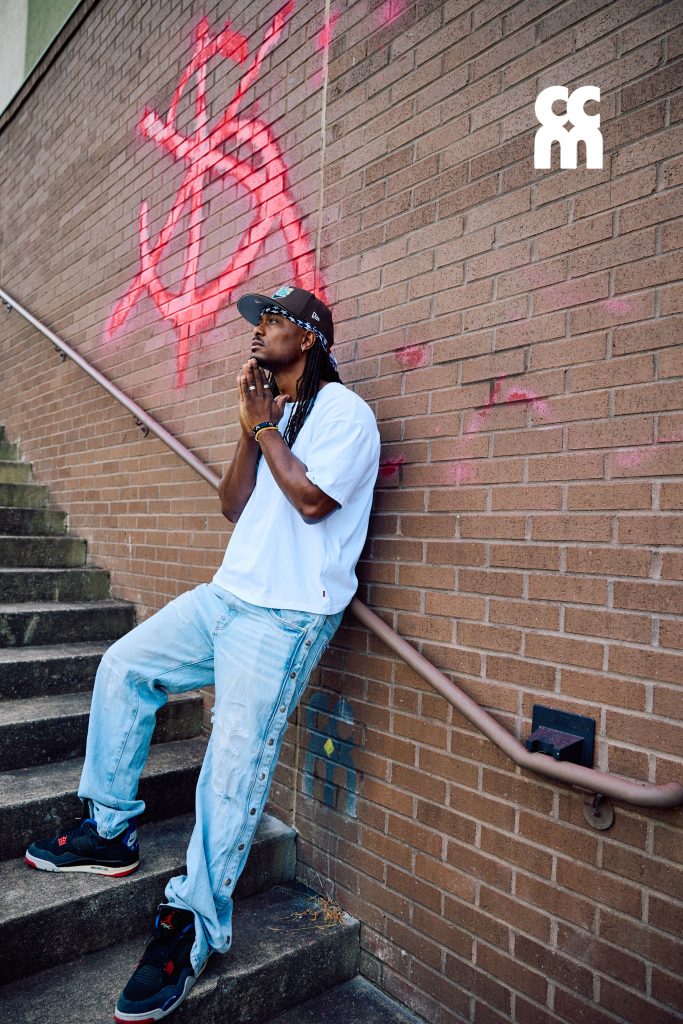
The phrase stayed with him long enough to become the title, and eventually the thesis, of his own record. But KB told me he did not begin the album with a clever title or marketing plan.
“I think that I start from burden,” he said. “I only try to make songs about things that keep me up at night.” He wants to make work that feels necessary.
“I try to… put projects out in the world that I feel like if they did not exist, something is wrong. That it would be wrong for me not to do this.”
As the songs began to take shape, so did the burden behind them. KB had become disturbed by what he describes as “performative Christianity.”
“We are sort of turning righteousness into opportunities for content,” he said, before moving into what he calls “tribal Christianity,” where faith becomes another way of signaling allegiance to the people whose approval we want.
It is a particularly fascinating argument coming from someone whose livelihood depends, at least in part, on putting Christianity into content. KB knows that contradiction is there.
He is an artist warning about celebrity. A man with an audience warning about audiences. A content creator warning about what content can do to the person creating it.
But THIS CANNOT BE SOLD is not KB pretending he has escaped any of those tensions.
It is him drawing lines inside them.
During our conversation, I asked whether he had actually been forced to take certain things in his own life “off the market.” His answer stopped being theoretical almost immediately. He said there are opportunities he has turned down, even concerts that could pay as much as a year’s salary. “My loyalty to the Kingdom, me not losing myself and becoming something that is ego, that lives in egomania and is self-centered… I want to remain a friend of God. That is my priority.” He paused before adding the cost. “If I have to choose, then I’m going with the thing that keeps me with Him. And that would cost me in some ways in this world.”
THIS CANNOT BE SOLD can be a question. Maybe even a challenge.
“I wanted to be a voice crying out in the wilderness, as it were. Reminding people that there are realities that exist outside of monetization. They exist outside of our algorithmic preferences.”
– KB
What in your life has no price? What part of yourself cannot be converted into opportunity, attention, content, influence or money? And perhaps more uncomfortably:
What have you already sold without realizing it?
For KB, one of the easiest things to sell without realizing it may be our attention.
“The algorithm is shaping us,” he told me.
That sentence could sound like the beginning of any number of conversations about social media, but KB’s concern is less about screen time than what those screens are teaching us to become. “They have found that there’s something that sells better than sex, and it is rage.”
KB sees a machine that rewards us for becoming louder versions of ourselves while convincing us that we are the ones using it. “We become angry, angrier with each other, more isolated,” he said. “And not realizing that this whole time we are being monetized by the platforms that we’re on, while we’re trying to monetize things on the platforms that we’re on.”
Christians are not somehow immune to this.
“We as believers can get caught in that same space where we do not see our engagement online as a mission field for trying to bring something different,” he said. “We just become reinforcers of what already exists.”
KB’s goal with this album, he told me, was to interrupt that cycle.
“I wanted to be a voice crying out in the wilderness, as it were,” he said. “Reminding people that there are realities that exist outside of monetization. They exist outside of our algorithmic preferences.” Then the preacher showed back up. “There is a King with a Kingdom that is here and coming,” KB continued. “Jesus reigns and His Kingdom will not be shaken.”
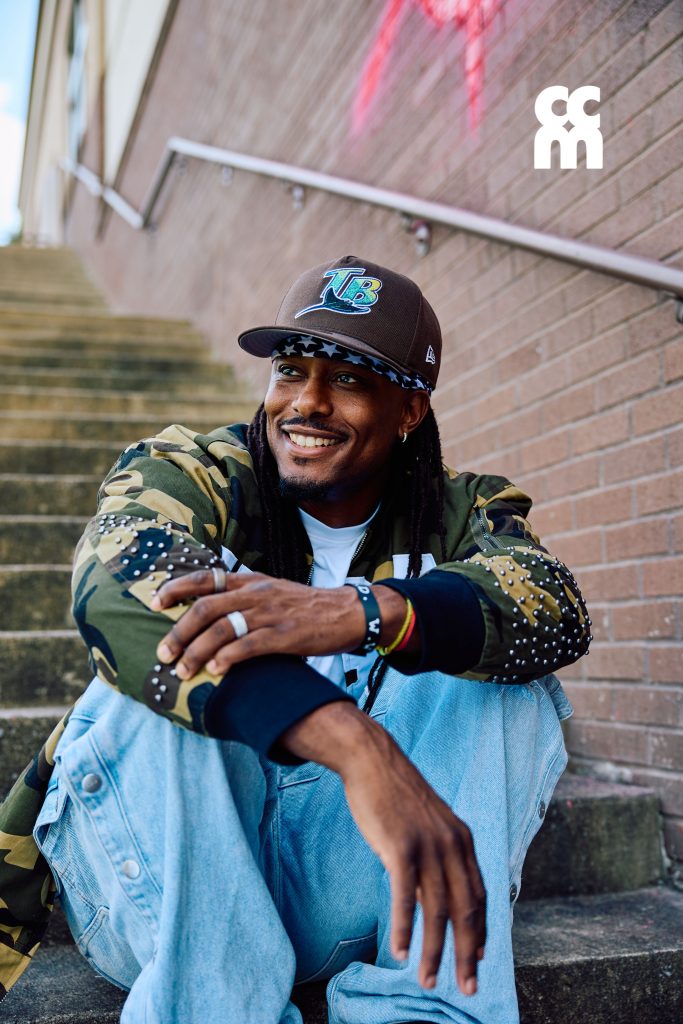
For all the sophistication of the problem he is describing, KB’s answer is strikingly old-fashioned. Church. Prayer. Community. That becomes especially important when the person being shaped by the algorithm is also a celebrity. KB knows the irony of warning people about fame while being famous. His music reaches millions. People know his face. They buy tickets to watch him perform. They quote his lyrics back to him. He has the same social media platforms he is warning everyone else about.
But his concern is not that influence itself is sinful. It is what happens when influence becomes the place where you begin discovering your identity.
“The goal for us is that we would be more Christian than we are artist,” KB told me. Then he repeated the thought in a way that made clear this was not a throwaway line. “I want my Christianity to be a modifier of any other label you give me.”
That sounds simple until you consider how completely the music business is structured around doing the opposite. An artist is supposed to build the brand. Grow the audience. Protect the image. Keep people interested. Stay visible. Stay relevant. Turn moments into content. Turn content into engagement. Turn engagement into tickets, streams, merchandise and whatever metric comes next. All of it is considered the evidence that everything is going well. The danger comes when those become the measurements of spiritual success too.
“If my life and those who don’t name the name of Jesus and we both have similar audience sizes look exactly the same, we are failing,” he said. That may be a difficult statement for any Christian artist to hear. However, what does success look like when the number getting bigger cannot be the ultimate answer?
KB’s response is almost aggressively unglamorous. Go to church, because you need church. “You can’t afford not being a part of a church. You cannot afford making your label your pastor.” Then he kept going. “You cannot afford traveling all year long, disconnected from community and being surrounded by people you pay. You can’t afford that… don’t believe the internet. The internet is telling you that you are this godly sage who every time he or she walks into the studio, you’re spinning out gold and changing the world,” KB said. “Everyone cares what you think. And when you speak, people clap.”
Try to stay painfully grounded. “Go stack chairs at the church.”
There may not be a better image for what KB is trying to communicate on THIS CANNOT BE SOLD. The same person who can stand in front of thousands of people, microphone in hand, needs a place where he is simply another guy moving chairs after service.
It also helps explain why the album refuses to neatly align itself with the boxes that would make it easier to market. By the time we reached its final title track, KB was talking about another marketplace entirely: the marketplace of teams. Political teams. Cultural teams. Even Christian teams. He is not pretending he has somehow risen above any of them. “I’ve got teams,” he told me. “I’ve got political leanings. I have got folks that I want to win. I have a bias. I have it.” But KB’s argument is that Christianity has to retain the authority to tell your own side no.
“All of those things have to be subordinate to the agenda of the Lord Jesus Christ, which is bigger than every single movement on this planet.” That becomes especially uncomfortable when the teachings of Jesus interfere with winning. “I think that the core message of the New Testament is that if you understand what essential Christianity is as something other than fervent love for God and love for people, you have misunderstood the New Testament,” KB said. “You’ve misunderstood Jesus.”
KB is not asking whether you have convictions. Clearly, he does. He is asking whether there is anything above them and anything capable of correcting them. But if THIS CANNOT BE SOLD were only an album of KB telling everybody else what they need to surrender, it would collapse under the weight of its own message. Eventually, he has to put something of himself on the altar too. And that is where this record gets much more personal.
One of the strange things about spending this much time talking with KB is that I cannot say I walked away knowing a whole lot more about the day-to-day details of his personal life. I learned a tremendous amount about what he believes. How he thinks. What concerns him. What he believes Christian artists should guard against. But the quieter guy I met before the cameras came on remained, in some ways, quiet. The album does not. The album gives us more than a peek into the personal side of KB. The theology is still there, but now it is colliding with childhood, fatherhood, marriage, suffering and the distance between what you believe and what you sometimes feel. The guy who spent much of our interview constructing theological arguments made a record that preserves the sound of the argument no longer being enough.
“There’s going to be friction between what you believe to be true and what you are experiencing,” he said. “I will trust God when I cannot understand what He’s doing… I will believe in His goodness when I don’t have good arguments to believe.”
There was the lawyer again. Except this time, the lawyer had run out of arguments. “That’s what faith is.”
When the cameras turned on I may have been hit by a train. By the end of the conversation, though, I at least understood where the train was headed.
THIS CANNOT BE SOLD is available now.

Leave a Reply
You must be logged in to post a comment.