

SKILLET: AFTER THE STORM
On paper, Skillet shouldn’t work. That sounds insulting, but I mean it as one of the highest compliments I can give them. Rock bands rarely get 30-year careers, and the ones that do certainly don’t tend to chart a trajectory that keeps climbing.
Thirty years into Skillet, I can turn on UFC Freedom 250 and there they are. WWE used “Legendary” to open Monday Night Raw for years. “Monster,” released more than a decade into the band’s career, has become a streaming behemoth surpassing 4 billion streams. The audience is filled with kids who were not alive when Comatose came out, now screaming those songs next to their parents and, sometimes, their grandparents.
That is not how this is supposed to work. John Cooper knows it. “No one is more surprised that we’re still a band than us,” he tells me. “I’m like… why would anybody listen to this? I’m still very shocked. We’re absolutely blessed.” He laughs, but he doesn’t dodge what he believes is behind it. “You can see God’s hand in it, for sure. There’s a lot of things that shouldn’t have worked.”

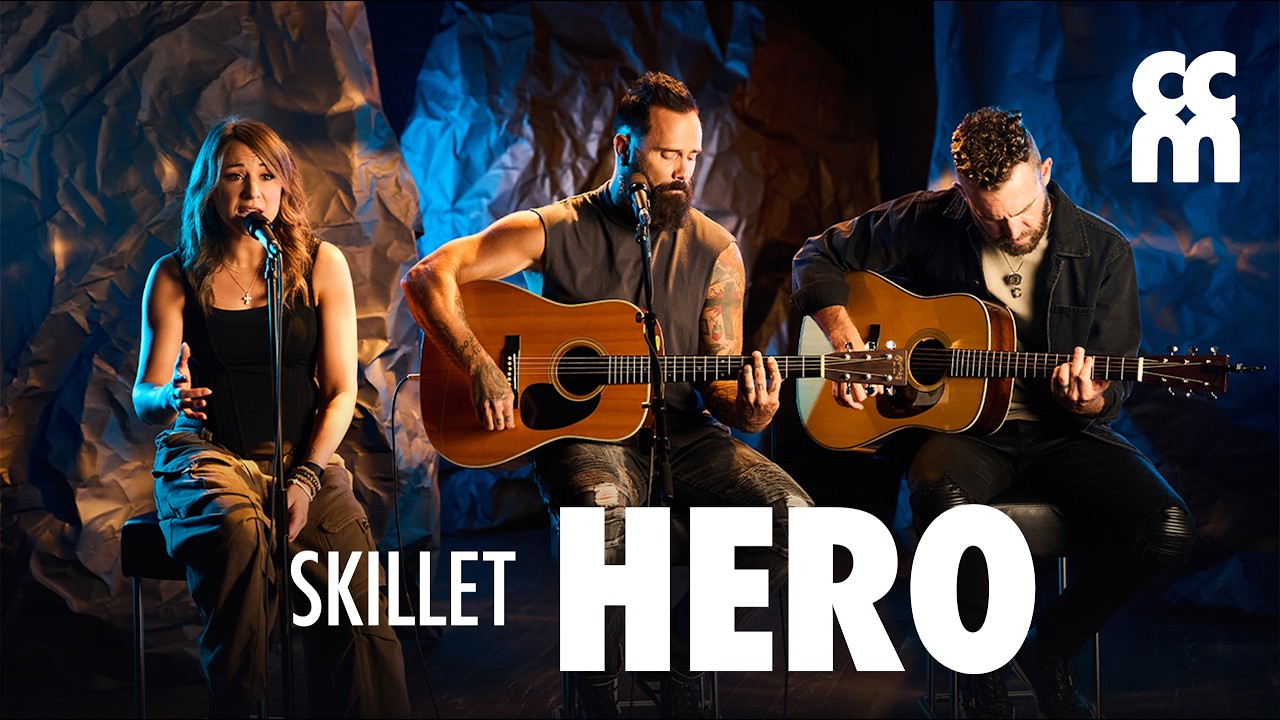

Particularly, he says, when Skillet began crossing into mainstream rock. There were doors they had repeatedly tried to push open and couldn’t. “I firmly believe those roadblocks can only be moved by the providential hand of God,” John says. “Because we tried before then to move those roadblocks. And it was impossible.” But even now, the past isn’t really the story. Because while we’re here to celebrate 30 years of Skillet and 20 years of Comatose, the band has arrived carrying fresh wounds. Some of them came from the last place they expected: the church. And those wounds have produced one of the most bruised records of Skillet’s career.
There was another choice John made during the band’s crossover years that, in retrospect, seems remarkably important. He decided he wasn’t going to pretend. When “Monster” began connecting with mainstream rock radio, John knew the questions were coming. Were they really Christians? Was this actually a Christian band? He had watched other artists navigate those waters in different ways and while he says he is not interested in criticizing anyone else’s decisions, he knew what he wanted from Skillet.
“As a Christian music fan, I know what I want to see a Christian artist say in that interview,” he recalls. So, he decided to answer before anyone could make the question embarrassing. “We absolutely are proud to be a Jesus freak.” He remembers an early mainstream interview where someone essentially asked if the rumors were true. Christians? Really? “Oh, absolutely, we’re Christians,” John responded. “Being a Christian is so much more important to me than being a rock star. I play music to express my love for God.”

The interviewer, John remembers, was stunned. John describes it as “smacking the bully” on the first day of school. It is a very John Cooper analogy. But Seth Morrison, who has now spent nearly 16 years beside him on guitar, sees something deeper. “People sense authenticity,” Seth tells me. “I think even people that maybe [are] atheists, they sense the authenticity of who we are, and I think they respect it.”
That word came up before the band ever walked into our studio. Before interviews like this, I will usually text a few people who know an artist. Producers. Friends. People who have worked with them. Not because I’m hunting dirt, but because 30 minutes before cameras roll is a bad time to discover some bizarre dynamic everyone else already knows about.
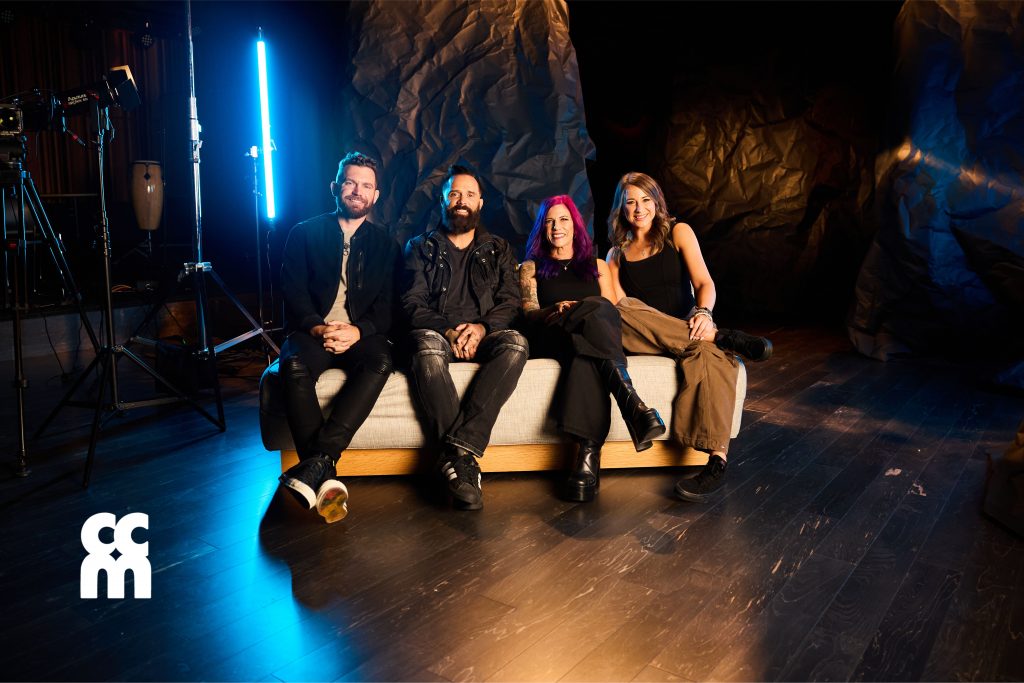
With Skillet, I kept getting essentially the same answer. They’re real. What you think you’re getting is what you’re getting. That becomes much easier to understand once all four of them are sitting together.
“Your first prayer should be who you get to do it with because that’s truly what’s life changing.”
– Seth Morrison
John may be the loudest and most recognizable voice of Skillet, but spend any meaningful time around the band and you quickly realize that Korey Cooper’s fingerprints are everywhere.
John offers a nautical explanation. “Imagine a ship where I am the captain without Korey being the rudder. Would anybody want to be on that ship?” Korey smiles. “It would be fun.”
Maybe briefly. Korey joined Skillet because the band needed a keyboard player and, conveniently, she was already there. Her attitude is and was “whatever we need to do to make this work.” That sentence may be the best description of her role in Skillet for the last three decades. As technology changed, she learned it. As the band’s production expanded, she expanded with it. Keyboards became programming. Programming became production. On their new EP, After the Storm, Korey produced half of the EP.
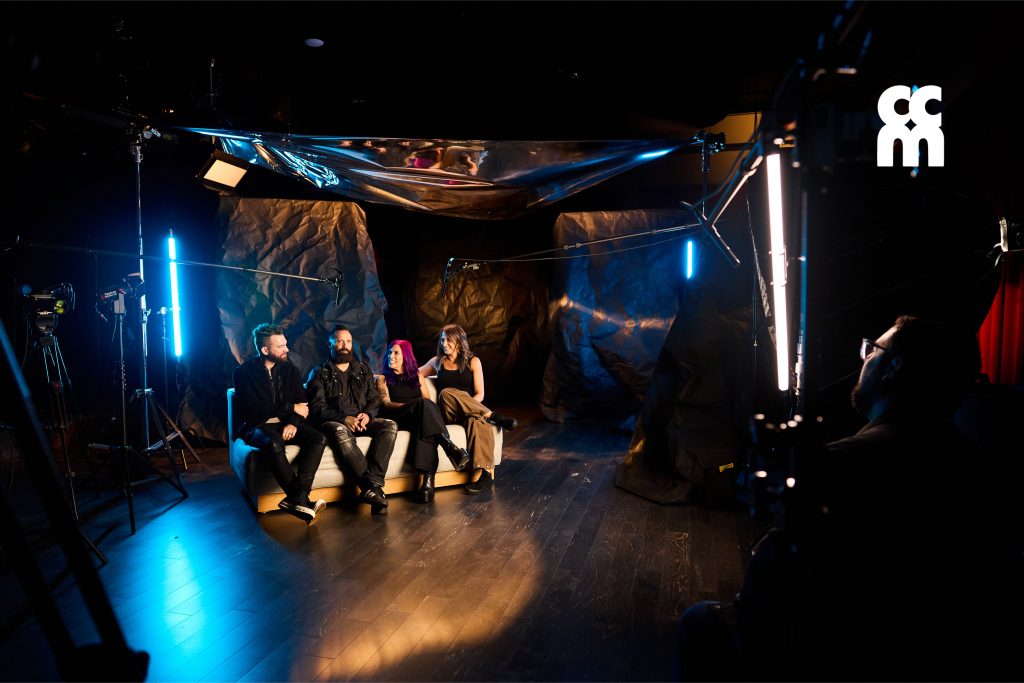
“I’m just kind of here to do whatever is necessary,” she says.
Jen Ledger has watched that up close since joining Skillet at 18.
She remembers Korey raising two young children on the road, homeschooling them during the day, producing music, playing a rock show and then coming back to read the Bible and pray with them at night.
Now in her 30s, Jen has enough perspective to realize how insane that was. Nearly two decades in, Jen can still find herself mentally transported back to the 18-year-old who climbed onto the Skillet bus unsure whether she belonged there at all.
“Sometimes I still feel like the 18-year-old that’s like, I can’t play drums and I can’t be in front of people,” she admits. The thing Jen was convinced she couldn’t do became the thing God asked her to keep doing. “The one thing I thought I couldn’t do is play drums in front of people,” she says. “Here I am.”
And here is no small thing. “It’s just amazing to see what God can do with a willing heart and someone who’s willing to obey,” she says, “and how His grace meets you in where you think you’re the weakest.”
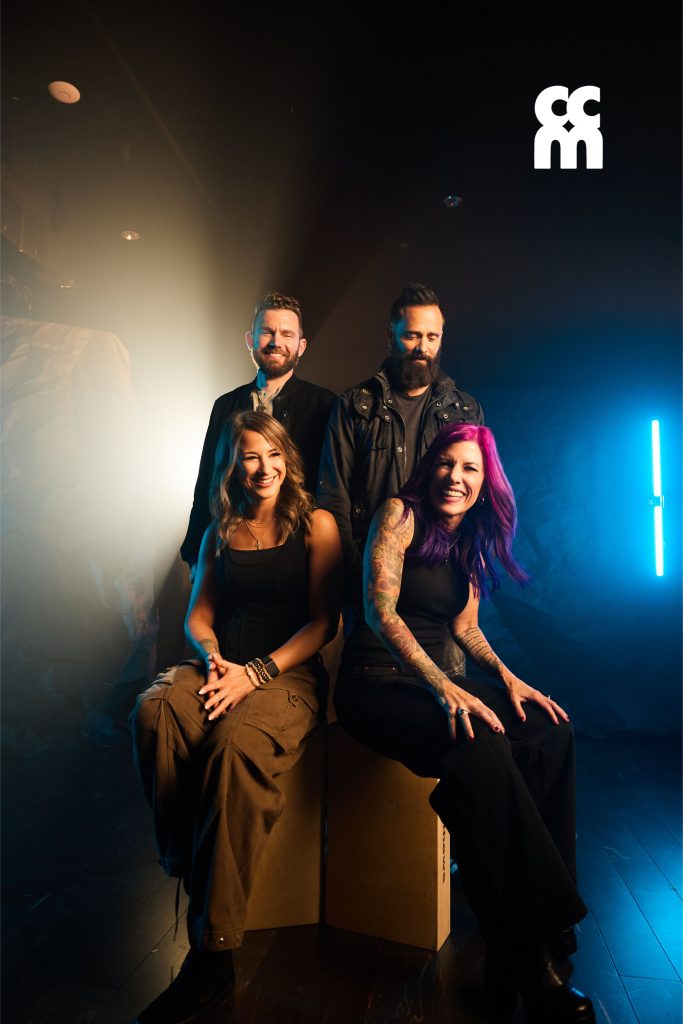
“Being a Christian is so much more important to me than being a rock star. I play music to express my love for God.”
– John Cooper
Nearly two decades later, the shows can still leave her exhausted, but when she thinks about what Korey was carrying during those early years, her perspective changes quickly.
“I am so tired just playing the show,” she says, getting emotional. “I cannot wrap my head around the capacity that [Korey] had… Me and Seth aren’t the same because we joined Skillet,” she says, crediting John and Korey’s grounding in Scripture during confusing seasons of life and faith.
Seth goes even further. “Your first prayer should be who you get to do it with,” Seth says, “because that’s truly what’s life changing.” He pauses. “Our lives are forever different by being around the Coopers, truthfully. I’m a different father. I’m a different husband. Beyond a career.”
For a band with this much history, Skillet has rarely seemed interested in becoming a nostalgia act. The first five albums are not exactly dominating the modern set list. There has always been another door to push through. But Comatose is turning 20, and even Skillet has to admit this one deserves a look back.
The funny part is that one of the defining albums of the band’s career was made while the entire enterprise was hanging by a thread. In 2006, John and Korey’s children were very young. The band did not have enough money to stop touring while recording. They would drive to Chicago to work in the studio, then load out and play shows on the weekends.
John was still selling merchandise. Still packing the trailer. At one point, he had to learn to drive the bus himself. Then their label situation nearly imploded. Lava Records was effectively being dismantled. Almost every band was getting dropped. Skillet somehow survived.
Their A&R representative was one of the last survivors at the label and one of his only demands in his new position was to keep Skillet. John remembers thinking: Why? They weren’t selling much. There was a very real understanding that if the next record failed, this might be it.
“It usually is a silent scream. People that feel that I have nothing left to live for.”
– John Cooper
“I’ll be a youth minister,” John remembers thinking. They were already nearly broke, so they decided to go for broke. Even with an incredible belief in the material that would make up Comatose, that did not mean anybody would buy it. Jen wasn’t in Skillet when Comatose was recorded, but she remembers hearing “Rebirthing” for the first time back in Coventry, England.
“What is this?” she remembers thinking. “This is one of the best things I’ve ever heard.”
She would stand in front of the mirror pretending she was playing drums in Skillet. Today, you can buy a ticket and watch her do it for real. But Jen thinks the album’s staying power goes deeper than its riffs.
“I feel like Skillet creates a home for all the people that don’t feel seen in the world,” she says. “They’re not the cool kids at school. They don’t feel like they have much to bring. It’s like they feel seen and understood and like they have a place where they belong.”
Comatose, she says, captured that particularly well. Korey calls the Skillet formula the “happy sads.” There can be hope in the lyrics and still a sadness underneath. That description also happens to be a pretty good bridge to 2026.
Twenty years later, Skillet found itself writing from a darker place again. This time, though, the wounds weren’t 20-year-old memories. They were fresh. “Not every single day is like you’re in a joy parade.” he says. Someone gets cancer. Someone loses a job. Depression shows up. Addiction shows up. A relationship collapses.
Or someone you trusted betrays you.
“This particular EP, because of what we’ve been through the last few years, is leaning towards, let’s just talk about the hard side,” John says. Not hopelessness. But not pretending either.
“I’m not okay. I know I will be okay, and I am reaching out to God saying, I need your help.”
While John, Korey, Jen, and Seth do not name names, they are clear about where at least some of the pain behind After the Storm came from. The church.
More specifically, leaders they trusted.
“Part of what we have been through are things I never thought I would see,” John says. “Church leadership, people that I’ve known for 30 years that I thought we were on the same page, end up treating people extremely abusively.”
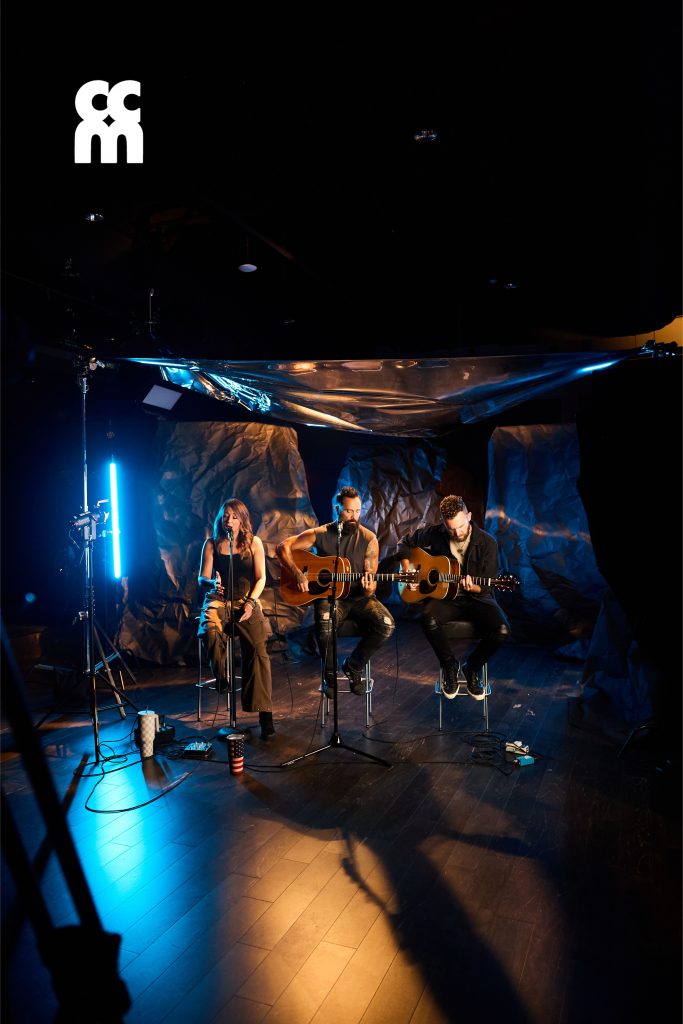
He describes leaders unwilling to accept challenge, unwilling to answer questions of doctrine and, in his view, expecting people to simply fall in line. John Cooper is not exactly known for ambiguity about his beliefs. If you have followed him for five minutes, you know that.
Which is what made the next part of our conversation so striking.
Because rather than using his own experience to harden his posture toward Christians who have deconstructed their faith, it seems to have given him more sympathy for them.
“I think that gives a little bit of credibility to so many people we have seen completely deconstruct and leave the faith and say it’s the church’s fault,” he says.
John is quick to add that he does not want them to leave Christianity.
“I wish they didn’t leave the faith. I wish they didn’t deconstruct, and I pray they come back.”
But then he says something I think needs to be heard as clearly as he said it.
“Their suffering more than likely was real.”
He continues:
“They probably saw something that was so gross that they never expected to see a pastor do that. And they went, well, this isn’t real, then maybe nothing is real.”
For a band that has spent 30 years boldly proclaiming its faith, that is not a small acknowledgment.
John does not surrender his convictions to make it.
He just refuses to dismiss the wound.
“I do understand their suffering,” he says. “And that’s an important thing to say.”
Later, he puts the betrayal in even starker terms.
“My pagan friends wouldn’t do this to me.”
There it is.
The storm.
Not an abstract theological exercise. Not merely internet criticism. People they trusted did things they never imagined those people would do. And Skillet had to figure out what faith looked like afterward. After the Storm does not sound like a victory lap.
“I’m not okay. I know I will be okay, and I am reaching out to God saying, I need your help.”
– John Cooper
There are flashes that longtime listeners may recognize, including hints of the industrial textures older fans associate with eras like Alien Youth. But emotionally, these songs live somewhere darker.
Seth’s favorite is the title track.
He believes there is a generation of Skillet listeners hungry for the songs that say the thing rock music has always been particularly good at saying:
“I’m not okay.”
Comatose was filled with those kinds of moments.
So is this.
“I think that rock music should be vulnerable,” John says. “That’s how I like it anyway.”
Korey talks about Christianity’s “already, not yet” tension. The belief that God’s kingdom is real while suffering is also very much real.
“You can prosper in terrible suffering,” she says. She points to Daniel. God was with him. He was also still in the lion’s den. Skillet isn’t announcing that everything worked out exactly the way they hoped. It is the sound of learning that faithfulness and pain can occupy the same room.
That is why “Scream” makes sense as the song leading this era. Korey produced it, which John immediately makes sure everybody knows. “She really crushed it.”
The song touches social media, isolation, condemnation and the experience of being surrounded by noise while feeling completely alone.
John describes the scream at the center of it as something that may never actually make a sound.
“It usually is a silent scream,” he says. “People that feel that I have nothing left to live for.”
The song sits in that darkness, but it does not stay there. That has always been the trademark of Skillet. The riffs can be violent. The subject matter can be bleak. The feelings can get ugly.
But somewhere, even if it is only a pinhole, light gets in.
Somehow the graph still points up. But maybe After the Storm reveals something more important about why. Skillet’s story was never that the storm didn’t come. It’s that they kept going after it did.
Leave a Reply
You must be logged in to post a comment.