


The Black Sheep Comes Home
“I think I’m still taking the eraser to the S on my chest.”
Over the last year, Christian music fans have embraced Ben Fuller as one of its freshest and most compelling voices. If you’ve seen his show, you’ve heard his testimony, The man who spent years chasing an insatiable high through drugs, alcohol, and women before finding Jesus and finding a new purpose. That version of the story is true.



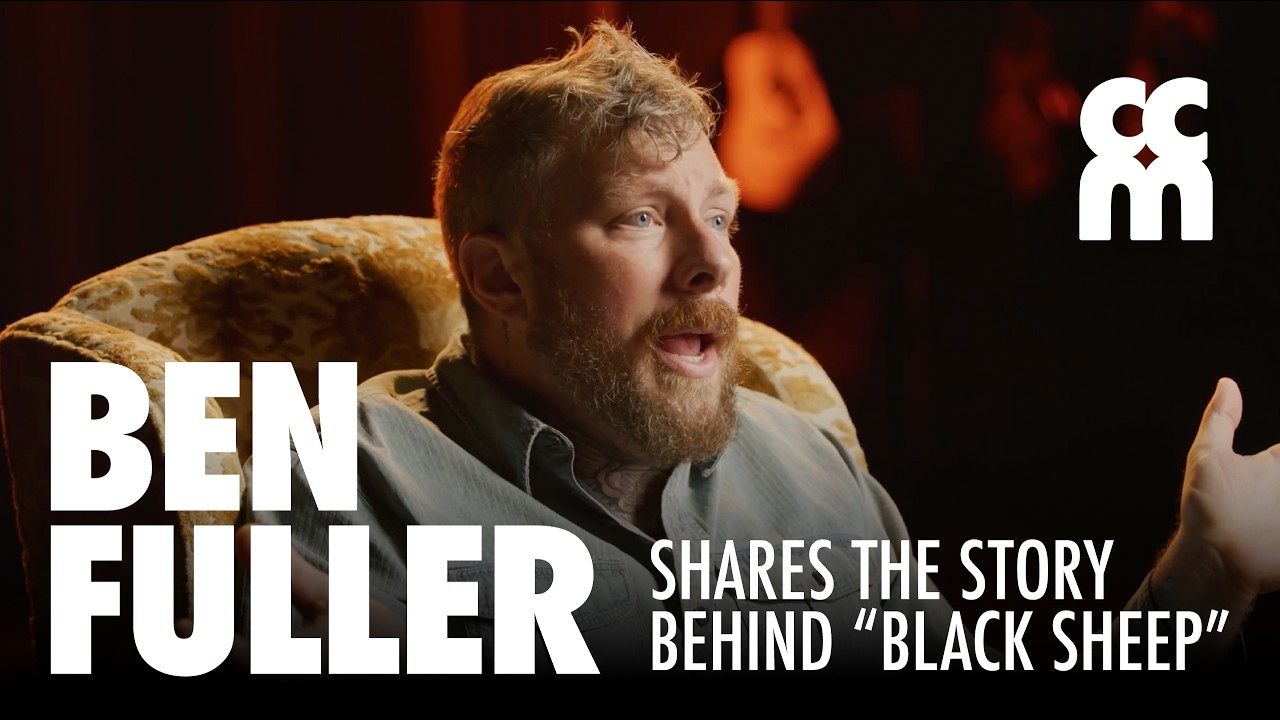
It’s also the version most people already know. What interests me is what happened next.
Because redemption is one thing. Living redeemed is another.
The first time I saw Ben Fuller perform was with Big Daddy Weave in Bowling Green, Kentucky. At the time, he was still relatively new to most audiences. One radio hit. A growing platform. A powerful testimony. But there was something different about him. I know this sounds like an oxymoron, but his self-described John the Baptist energy felt suspiciously authentic.
“I want everyone to experience this fullness in the presence of God. I want everyone to be John the Baptist with locusts and wild honey in their beard running through the woods.”


After the show, I found my friend Jeremy Redmon from Big Daddy Weave and asked the question directly. “Is this guy real?”
The answer came immediately.
“He’s realer than anybody I’ve ever worked with.”
Standing at 6-foot-4, Fuller can be an intimidating presence. His neck tattoos tell stories we’re not ready to know. During our conversation he’s talking about cedar-shaking roofs, planting corn, and building things with his callused hands between tour dates.
Yet every few minutes he seems to physically hunch himself downward, almost subconsciously trying to meet people where they are. And over the last two years, as his songs have connected with thousands of people, Fuller has found himself carrying a different weight: the true stories of the real black sheep he meets nights after night.


“The one thing I found with being real and authentic and raw and just telling it like it is… with that comes, ‘Hey man, I had a gun in my mouth.’ ‘Hey man, my cousin’s dealing with addiction right now.’ ‘Hey man, my mom died of alcoholism.’”
For someone whose life was saved so dramatically, there is a temptation to believe everybody else’s can be too. “I realized, the truth is I can’t save everybody… I’m not God.”
That realization didn’t come from a book, a sermon, or even another artist.
It came from a letter. Just days before we sat down, Fuller unfolded a note he had received from a woman who had attended one of his concerts.
Normally, those notes contain song ideas, prayer requests, or stories of encouragement. This one was different.
“She said, ‘Hey, do you remember meeting this man at one of your shows? He didn’t make it. He was my best friend. He looked up to you and he didn’t make it. He went back, he fell, and he’s dead. But thanks for telling him about Jesus.'”
The words still seem fresh on Fuller.
“I told him about my Jesus. I told him about what God has done for me.”
The reality is one Fuller is still learning to process.
“I think I’m still taking the eraser to the S on my chest.”
He wants people to experience what he experienced. Who wouldn’t? After fourteen and a half years of addiction, chaos, and self-destruction, Fuller found a life he never imagined possible. The instinct is to grab people by the shoulders and pull them toward that same freedom.
“I want everyone to experience this fullness in the presence of God. I want everyone to be John the Baptist with locusts and wild honey in their beard running through the woods.”

But life rarely ties itself up that neatly. This is the reality of Ben Fuller’s ministry.
One night he’s standing in front of twenty thousand people. The next he’s reading a letter from a grieving family. One moment someone is telling him they threw away their pills after hearing his songs. The next he’s wrestling with questions that don’t have easy answers.
For a man who came to faith in recent years, he has a lot of questions for God. Some heavy ones: “Why did my best friend die and not me? Why her? Why not me?” Some with childlike wonder in his eyes.
“Why did you make stink bugs?”
But underneath the joke is a man still working through the mystery of grace.
A man who knows he should have been another statistic.
A man who still isn’t entirely sure why he wasn’t.
“It’s one of the greatest joys and sorrows that I’ve ever experienced following Jesus.”
And maybe that’s the tension that explains Ben Fuller better than any testimony ever could.
Not that God rescued him.
But that now he has to keep living with both the victories and the heartbreak that come from telling other people where that rescue can be found.
Those conversations eventually became impossible for Fuller to ignore.

Night after night he met people who believed they had gone too far. People who listened politely to his testimony but quietly convinced themselves it couldn’t possibly apply to them.
“They’re like, ‘Yeah, but you don’t know what I’ve done. Your testimony is powerful, but I’ve messed up way more times. I’m not good enough to turn around and come back. I’ve ticked God off. I’ve done awful things.'”
Fuller knew those people because he had been one of them.
“I’ve met those people and I know those people because I was one of those people.”
So when he walked into a writing session with Michael Farren and Tony Wood, he wasn’t looking for a radio single. He was searching for the black sheep.
An hour later, they had one.
Like many of the defining moments in Fuller’s career, he talks about the song as something that happened to him rather than something he manufactured. “God just really downloaded that song to us in an hour.” The result was a song that felt almost too honest for Christian radio. It didn’t hide behind vague language or church-friendly metaphors. And because of that, not everyone was convinced.
“I was told that song was going to live somewhere in the middle of a record,” Fuller said. “Maybe we could cut it. Maybe not.” The concern wasn’t whether the song was good.
The concern was whether Christian audiences would accept it.
“I say alcohol and pills,” Fuller laughed. “We can’t say that in Christian music.”
But Fuller couldn’t shake the feeling that those were exactly the people he was trying to reach.
“How does that speak to a 40-year-old mom in a van with the kids?” he remembers hearing.
His response came quickly.
“What about the husband that’s cheating? What about the wife that’s drinking too much wine? What about the kids secretly watching things they shouldn’t be watching on their iPads?”
Then he shrugged.
“We should be talking to those people.”
Ben Fuller is not particularly interested in protecting appearances.
“I’ve had to stand firm in things and look crazy” he said. “There have been lyric changes and things over the years. I’ve had to look really bad. I’ve had to forfeit relationships.”
He would rather risk being misunderstood than water down a message he believes someone desperately needs to hear.
And judging by what happened next, that instinct wasn’t wrong.
What was supposed to be an album track became an anthem because thousands of people heard themselves in it. The black sheep always know when someone is speaking their language.
The success led to the Black Sheep Tour. Over 10,000 miles, tens of thousands of people, and over 130 baptisms. Yet when I bring up those stats, he shifts uncomfortably in his seat. He wants to talk about the moments, not the data.
A young man laying down a vape at the altar. Someone leaving cigarettes behind. People showing up carrying addictions, secrets, shame, and stories that looked a lot like the ones he used to carry himself.
When the opportunity came to capture the tour for what would become The Black Sheep Live Experience, Fuller admits he wasn’t exactly prepared.
Neither was the band.

“This was recorded after the second night on tour,” he told me with a laugh. “My whole band came to me and went, ‘Ben, we’re not ready for this.'”
Most live albums are recorded after months on the road when every note has been refined and every transition polished.
“We stood up and called on the name of Jesus,” he said. “We were like, okay God, we do not know all the parts right. We do not have everything together.” It’s clear the reason the Black Sheep Tour, his show stealing solo performance at the K-Love Fan Awards, and the heart of this mission connected was pricey because it wasn’t perfect.
It was because it was honest.
Every city looked different. Every crowd responded differently. Every night seemed to take on a life of its own.
“Same Spirit. Different city.”
One night might be loud and celebratory. Another might feel almost reverent. Sometimes he would find himself stepping away from the microphone entirely, watching people respond in ways he couldn’t have scripted if he tried.
“The Holy Spirit just did a different work in every city.”
That’s also why Fuller wasn’t particularly concerned about which show ended up becoming the live album.
The first night. The final night. It almost didn’t matter. The story wasn’t happening on stage. The story was happening in the seats. The live album simply became a snapshot of what God was already doing.
For all the miles traveled, stages played, and stories carried, the most significant thing happening in Ben Fuller’s life right now has nothing to do with music.
It’s happening back home. Or maybe more accurately, it’s teaching him what home actually means.
“I’ve had to stand firm in things and look crazy. There have been lyric changes and things over the years. I’ve had to look really bad. I’ve had to forfeit relationships.”
Over the last few years, fans have watched Fuller transform from a man known primarily for his testimony into one of Christian music’s fastest-rising artists. What they haven’t seen as much is the driving force behind his next transformation taking place off stage.
Her name is Peyton.
When Fuller talks about his fiancée the urgency softens. For someone who spent years running from commitment, stability wasn’t always a comfortable idea. In fact, there was a moment when he walked away from the relationship entirely.
After a season he describes as growing “weary in doing good,” Fuller found himself questioning everything.
“I was ready to quit. I was ready to give up.”
Face down on the floor of his farmhouse, exhausted and overwhelmed, he prayed.
And what came back was surprisingly simple. “Ben, I gave her to you because she’s steady for you.” That word has stayed with him ever since. Steady. A few days later, sitting with his parents in Vermont, the word surfaced again.
His father looked across the room and asked a simple question. “Where’s Peyton?”
Ben explained that he had ended the relationship. His father’s response stopped him cold.
“Your mother and I just thought she was steady for you.” The same word.
Again. And for a man who spends much of his life trying to discern God’s direction, that was enough.
The day after Christmas Fuller arrived in North Carolina, knocked on Peyton’s door, and told her he wasn’t leaving again. Eventually that journey led back to the same field where they first met. This time he wasn’t introducing a song.
He was asking a question. Today they’re preparing for a November wedding. And perhaps for the first time in his life, Ben Fuller seems genuinely excited about slowing down.
Not stopping. I don’t think there is an off switch for the human being sitting in front of me.
Just slowing down enough to remember that life isn’t only lived on stages.
As he tells me stories about Peyton, another detail begins to emerge. The always on fire artist who can now be found performing often at the Grand Ole Opry needs to stay grounded.
“She’ll pray for me. She’ll encourage me,” Fuller said. “But she’s also like, ‘Take out the trash please.'”
The same man who once thought following Jesus meant a non-stop train of evangelism running endlessly now seems to be discovering that faithfulness sometimes looks a lot more ordinary.
A roof to finish. A wedding to plan. A future to build.
That’s the real story of Ben Fuller in 2026. It’s that after years of running, he finally seems to understand the invitation he’s been singing about all along.
Standing in the back of a church in 2019, underneath an exit sign and ready to leave, Fuller heard something he still can’t shake:
“I love you. Will you come home?”
Years later, that question still echoes through his songs. Through the stories shared after concerts. Through every person convinced they’ve wandered too far to come back.
But somewhere along the way, the question became personal again.
Today, Ben Fuller isn’t just singing about coming home. He’s building one.

And maybe that’s why The Black Sheep Live Experience resonates the way it does. It’s more than a collection of songs. It’s a snapshot of a season. A season where a former addict became a voice for the outsiders. Where a black sheep started helping other black sheep find their way back to the Shepherd.
Not because he has all the answers.
Not because he’s figured everything out.
But because he knows what it feels like to hear your name called and realize the door home was never locked in the first place.
Leave a Reply
You must be logged in to post a comment.