

CONTENT ADVISORY: Our interview with Ketch Secor and the documentary Louder Than Guns discuss gun violence, school shootings, trauma, and grief. The film contains strong language and emotionally difficult content that may not be suitable for all viewers. Viewer discretion is advised.
Some interviews are easy. This wasn’t one of them. Not because of the person I was speaking to. I’ve been a fan of Ketch Secor and Old Crow Medicine Show for years. The challenge was knowing that the conversation itself would make some people uncomfortable. The topic is heavy. The emotions are real. And the proverbial landmines are nearly impossible to avoid. But sometimes those are exactly the conversations worth having.
The moment I saw the press release for Louder Than Guns, I knew it would likely divide our audience. That’s not because the film is partisan. In fact, after watching it, I’d argue the opposite. It’s because the subject matter itself has become one of the most emotionally charged conversations in America.
That’s why I wanted CCM’s audience to hear directly from Ketch.
Yes, he’s best known as the frontman of Old Crow Medicine Show, the Grammy-winning band behind “Wagon Wheel.” But what many Christian music fans may not realize is that Secor’s faith has been a defining part of his life long before this documentary ever existed.
Raised in the Episcopal Church, the son of educators who spent their lives building faith-based schools, Secor would eventually help found the Episcopal School of Nashville. His faith isn’t a recent addition to his public identity to pander to our audience; it’s part of the foundation underneath it.
The documentary emerged in the aftermath of the Covenant School tragedy in Nashville, a shooting that hit especially close to home for many families in Middle Tennessee. Like countless parents, I remember the weeks and months afterward. My own children attended a Christian school just minutes away. For many of us, the tragedy shattered the illusion that these events only happen somewhere else.
Secor felt that same reality.
“When it did happen in Nashville,” he told me, “I felt a powerful sense of strength within our Music City community to really be a place where the buck could stop.”
What makes Louder Than Guns unique is that it doesn’t spend its runtime telling viewers what to think. Instead, it asks people to listen.
The film takes viewers into churches, schools, community centers, and conversations with people who often disagree profoundly with one another. Pastors, physicians, gun owners, parents, and community leaders all get a seat at the table.
“I was really proud that we were able to pull off this sort of unthinkable formula,” Secor said. “One of the most polarizing topics in American society… gun violence, the Second Amendment, gun reform… we were able to address it by looking at it from the vantage point of all the strata of Americans.”
Though honest about his personal political leanings, the commitment to listening for Secor is rooted in something deeper than politics.
“I see that as a spiritual problem,” he said, referring to the reality of gun violence affecting children. “Where are the people of the Spirit who are going to say, ‘Hey, I think I read somewhere in Isaiah where it says beat your swords into plowshares?'”
Whether viewers ultimately agree with every conclusion or not isn’t the point of the project. “I’m not a political figure,” he said. “I’m just a musician and a dad and a parent and a Christian and somebody who cares deeply about our Nashville community. So, I don’t know what the right answer is.”
At one point in the documentary, students discuss their inner monologues of where they would hide if a shooting began. As a parent, it was one of the moments that stayed with me most after watching the film. Like many parents, I know where every exit is when I take my family to a movie theater or concert. What struck me wasn’t that parents think about those things. It was hearing children think about them too.
“I tell the rectors and pastors, it’s your parishioners. It’s the kids in the pews and in Sunday school who are afraid.”
That challenge to the Church became one of the most compelling parts of our discussion.
When I asked what the Church can offer this conversation, he didn’t point to politicians or media figures. He pointed to local congregations. He described passing church signs advertising prayer groups, addiction recovery meetings, homeless outreach, and prison ministries.
Then he posed a question:
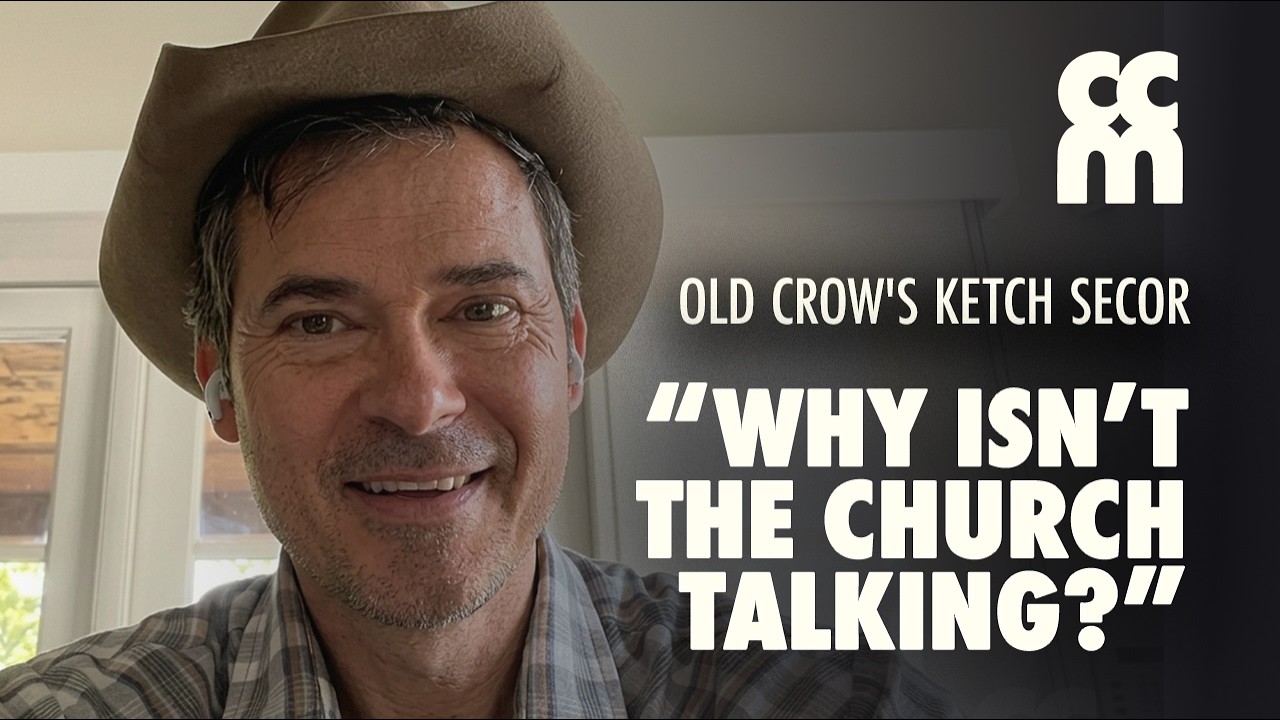
“Why doesn’t the sign board out there say, ‘Let’s get together and talk about what happened at Covenant?’” It’s the kind of question Secor believes churches should be asking. For him, the greater danger is not disagreement but disengagement. “The opposition is outrage,” he said. “That’s a stalemate. There’s no forward motion.” His solution isn’t retreating into ideological camps but creating spaces where difficult conversations can happen face-to-face.
That belief may also explain why someone like Secor was uniquely positioned to make this film. For more than two decades, Old Crow Medicine Show has occupied spaces that rarely overlap. The band can play Bonnaroo, perform on the Grand Ole Opry, play bluegrass festivals, collaborate with gospel artists, and connect with audiences from wildly different backgrounds.
“The thread,” Secor told me, “is the power of American song.”
For him, music remains one of the few places where people who disagree on nearly everything else can still stand shoulder-to-shoulder and sing together.
What I ultimately I took away from Louder Than Guns was a challenge. A challenge to listen more carefully, love our neighbors more intentionally, and engage with difficult issues without surrendering conviction or compassion. The film may ruffle feathers. So might this conversation. But if we’re serious about hearing from believers who are trying to navigate difficult realities through the lens of faith, these are conversations worth having.
Whether you agree with Ketch Secor or not, he’s having that conversation openly through the eyes of a Christian, a father, a musician, and a member of the Nashville community he loves.
For more information on upcoming screenings or to watch via PBS visit louderthanguns.com
Leave a Reply
You must be logged in to post a comment.