

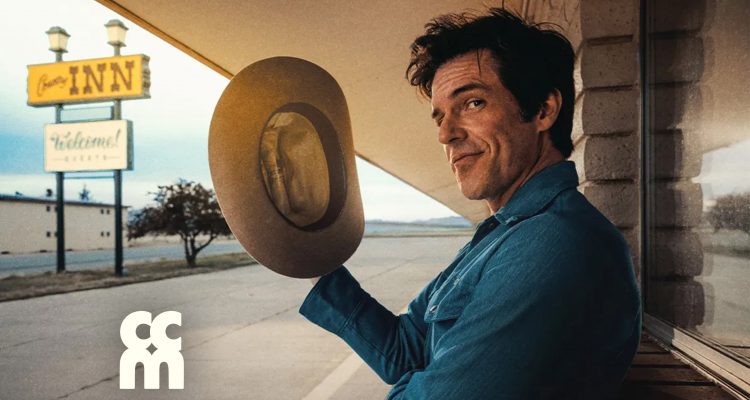
The Killers frontman debuts to “father’s” country-western music for a deeply personal album filled with rhinestones, sawdust, biblical imagery and an unforgettable encounter with the King of Rock and Roll.
Every so often, an album arrives that feels tailor-made for me. When that happens, I’m reminded that so many of us think we grew up uniquely, but in reality we share the same childhoods. Rock and roll theatricality and country storytelling weren’t competing forces, they were often times just a different part of the same cassette tape collection. Those lines were always blurry and they remain so on Thrasher, the new Nashville-inspired and Nashville-recorded solo album from Brandon Flowers.
Flowers has spent more than two decades fronting The Killers, one of the most consistent creative forces in modern rock. From the groundbreaking Hot Fuss forward, there really hasn’t been a miss. The scale, sound and ambition may change from record to record, but The Killers always seemed to be searching for heaven somewhere beyond the glow of the Las Vegas Strip.
With Thrasher, Flowers turns his attention to what he calls his “father’s music.” This isn’t a rock star putting on a cowboy hat because country happens to be fashionable. It feels like an intentional return to the music he inherited.
He came here to Nashville to find that sound, recording at the historic RCA Studio A. The sessions brought together an extraordinary group of Music City musicians that played together live in the room, an approach Flowers hadn’t taken with a band since he recorded Sam’s Town. You can hear that immediacy throughout the album. Thrasher doesn’t sound cleaned up and tweaked. It feels refreshing and jarring to the modern listener who is used to studio perfection.
It’s no surprise that Flowers shines with the attention of a live band of seasoned professionals. If you’ve experienced The Killers, you know it’s a purely joyous concert experience. Flowers spends much of the night smiling from ear to ear while an audience of millennials, now often joined by their children, singing along at full volume to an evening of stadium sized hits. Against the glittering backdrop of a Las Vegas-sized rock show, he frequently begins the evening like a maître d’ welcoming everyone into his establishment, and for the next two hours, the audience is invited into their world: a universe populated by dreamers, gamblers, heroes, villains, runaways and, more often than not, Jesus himself.
While Flowers’ solo career has always stood on its own, Thrasher feels as more like a complete solo reboot as it does a follow-up to Flamingo and The Desired Effect. The spiritual and emotional vocabulary remains unmistakably his and there are remnants of The Killers here, of course. Occasional synthesizer undertones shimmer behind the country arrangements, while several songs return us to the dusty childhood small-town world of Nephi, Utah, explored on Pressure Machine.
The opening track, “Does It Ever Cross Your Mind?,” arrives with the easy swing of a song you might hear at the Grand Ole Opry, performed by an aging legend who somehow convinces you to think “Oh, I know this song.” That immediate familiarity runs throughout Thrasher, but the lives Flowers depicts are often more complicated than the comfortable arrangements initially suggest.
“Paradise” is an absolute blast, exploding out of the speakers as Flowers embodies the life of an aging Las Vegas casino valet. Then there is “Miss America,” one of the album’s most heart-wrenching moments. Inspired by Flowers’ sister, the song confronts a cycle of abuse with a directness that can be difficult to hear. My wife and I sat in near silence as the track played. You may experience this once and that may be enough. Against that darkness, Flowers imagines the possibility of a different kind of life for his sister, where a “Mormon boy” might finally treat his sister like a queen.
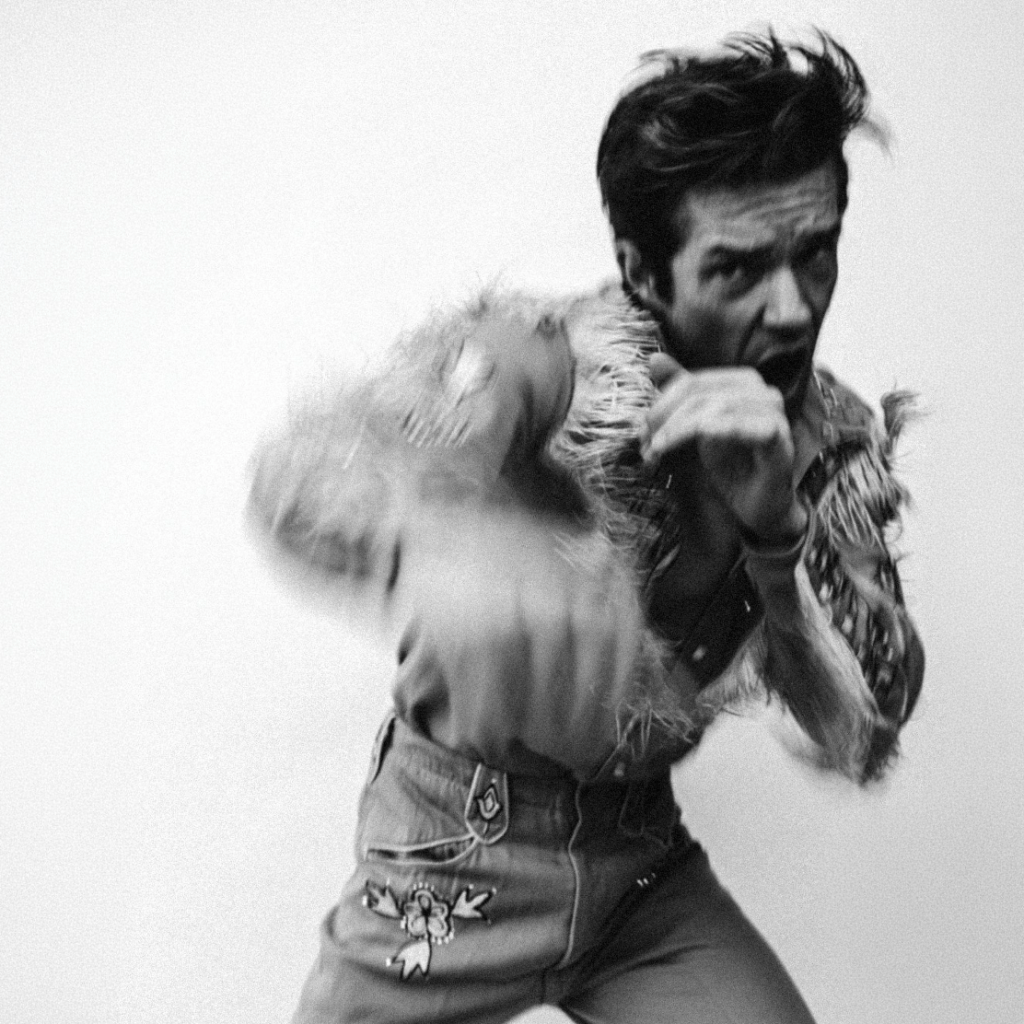
With so many direct references to faith, you may ask yourself, “Is Brandon Flowers making Christian music?”
Flowers has never shied away from his identity as a member of The Church of Jesus Christ of Latter-day Saints, even when that identity made him an outsider within rock culture. In a recent interview with Craig McLean, Flowers acknowledged that his relationship with the faith of his childhood required an adult decision. “Well, I have discovered you can be Mormon and cool. But it’s been a real journey. I was so young when we started. I was indoctrinated into this church, I understand that. But at some point, you’ve got to decide if it’s going to be your faith or not. That’s where the rubber meets the road. And I deepened my faith once I really committed to that road. I don’t find it nearly as difficult now to decide what choices I’m going to make.” The Observer
Speaking with Will Hodgkinson, Flowers was even more direct: “I really believe it. Faith has been a profound part of my life, and I’m drawn to Jesus Christ.” He also spoke about his father’s conversion when Flowers was six, remembering how the disappearance of “Budweiser and the cigarettes” from their home coincided with his father becoming “a better guy.” The Times
CCM readers will recognize that our theological traditions differ in significant ways. Those differences shouldn’t be ignored or casually flattened. Thrasher should not be presented or categorized as coming from a standard evangelical point of view. CCM’s interest in this album is not an attempt to erase those distinctions or imply a theological endorsement. It is an acknowledgment that Flowers’ faith meaningfully shapes his art and that the biblical language, spiritual questions and shared moral themes within these songs give our audience a legitimate reason to engage with them thoughtfully and discerningly.
That being said marketed “Christian” artists should take note, that Thrasher and the catalogue of Flowers/The Killers contain more direct references to Christ, heaven and biblical principles than you will find on many releases marketed specifically to Christian audiences outside of Worship music. This is the same songwriter who warned about a devil who doesn’t resemble Jesus in When You Were Young, celebrated the sustaining power and rarity of a loving marriage in Dying Breed, and retold the emotional arc of the prodigal son in Fire in Bone. Flowers has never treated faith like a decorative accessory. It is part of the architecture of his songwriting.
I can’t discuss Thrasher without discussing its final track, “An American Dream,” even if I’m reluctant to reveal too much about it.
It feels strange to place a spoiler warning on a song, but this is one worth experiencing without knowing exactly where it is headed. This psychedelic song imagines a dream that Flowers has where is reaching the end of his life. What follows includes a Tesla and an unexpected interaction with the King of Rock and Roll. I have great reverence for Elvis Presley, and I appreciate that he isn’t used here as a pop-culture punchline. The King becomes something closer to a spiritual predecessor: another larger-than-life performer raised in church, caught between the sacred and the spectacular, now passing something down to the artist who followed him.
The record reaches its destination in a great collision of “Gold and Silver, God and Glitter.” That phrase could almost serve as a mission statement for Brandon Flowers’ Thrasher. Faith and fame, eternity and entertainment, heaven and hell, Las Vegas and Utah. It all finally makes sense when Elvis is there to throw him the keys as he offers one final word to his protégé: “put it on Jesus.”
Thrasher is available on 8/21.
A Content Note for CCM Families
This album contains a few mild profanities, along with direct references to violence, abuse and sexual content. These elements are not presented in a celebratory fashion, but as essential parts of the stories being told. Several songs confront abuse and trauma with a directness that children will not be prepared to process.
Expanding the CCM Conversation
CCM Magazine is beginning something that may feel new to some readers: thoughtfully covering select mainstream releases that we believe are worthy of our audience’s attention.
This isn’t about chasing every major release or diluting what CCM has represented for nearly 50 years. It is an opportunity to broaden the conversation around music, faith and culture and to recognize that spiritually meaningful art has never existed exclusively within the boundaries of the Christian music industry. We can engage seriously with the art, celebrate what it accomplishes and honestly identify content Christian audiences may find objectionable. Covering an album does not require endorsing every lyric or aspect of an artist’s worldview. It means helping our readers approach the music with curiosity and discernment.
More importantly, this isn’t a reinvention of CCM’s mission as much as a return to its history.
Before making this decision, I spoke with CCM founder John Styll about how the magazine approached these questions in its earliest years. His answer was refreshingly clear: “We did not make a distinction between mainstream releases and Christian-market releases. We only reviewed mainstream albums when we thought there was a reason our audience would be—or should be—interested.”
That philosophy provides the framework for what we are doing now.
We will remain selective. We are acknowledging that our readers listen widely, that faith sometimes appears in unexpected places and that CCM Magazine can add something valuable to the larger cultural conversation.
Our role should be more than identifying which industry category an album occupies. It should be recognizing music worth hearing, exploring the ideas within it and helping our audience decide whether it belongs in their lives. In that sense, covering Thrasher isn’t CCM stepping outside its history. It is CCM continuing it.
Leave a Reply
You must be logged in to post a comment.